

Winter is the most challenging time of the year for your plumbing system. Cold temperatures, holiday gatherings, and increased use of indoor water are the perfect recipe for winter plumbing problems. You can face many problems that include sudden sewer backups to frozen lines, and the risks dramatically increase once temperatures drop.
According to research, plumbing-related emergency calls spike by up to 30% during winter. This occurs mainly due to freezing, blockages, and heavy water flow during the holidays. When problems hit, they hit fast, flooding basements, backing up toilets.
This is why Drain Drainers stands out as the fast-response local solution. With 24/7 emergency teams, advanced sewer cleaning tools, and winterized techniques, they help homeowners stay ahead of costly disasters.
Top 5 Winter Sewer Emergencies
- Sewer Line Freeze & Burst Pipes
We know that in winter, the supply lines often freeze, but sewer lines can freeze as well, especially when the drainage flow is slow or the ground is deeply frozen. When ice builds up in the pipes, it causes them to expand. This increases the pressure until the pipe cracks or bursts.
Normally, the slow-draining signs include gurgling noises or sewage odours coming from sinks and floor drains. You may also notice frost on exposed pipes in crawl spaces or basements. You can prevent this by conducting a pre-winter inspection.
By adding insulation to vulnerable sections and repairing sagging or cracked areas before it gets cold, you can prevent freezing. Furthermore, in very cold weather, letting warm water run through the pipes can help keep them clear. This also lowers the chance of ice blockages.
- Grease Clogs From Holiday Cooking
In winter, kitchens get busy. Holiday cooking makes a common problem worse: grease clogs in the sewer. When hot grease enters the sink, it cools and solidifies on the pipe walls.
Food particles and soap stick to the residue, creating a thick blockage. This narrows the pipe and slows down drainage. Grease that hardens in pipes can push debris into the main sewer line. This can cause backups in the house.
To prevent this, avoid pouring oils down the drain and use a container to collect grease instead. A grease trap is also useful for busy kitchens. Running hot water after dishwashing helps, but it’s not a complete solution. The most effective prevention is scheduling hydro jetting before winter to remove build-up.
- Tree Roots Intrusion And Cracked Pipes
Even in winter, tree roots still look for moisture, and sewer lines offer that. Small roots push into tiny cracks or loose joints, expanding as they absorb water.
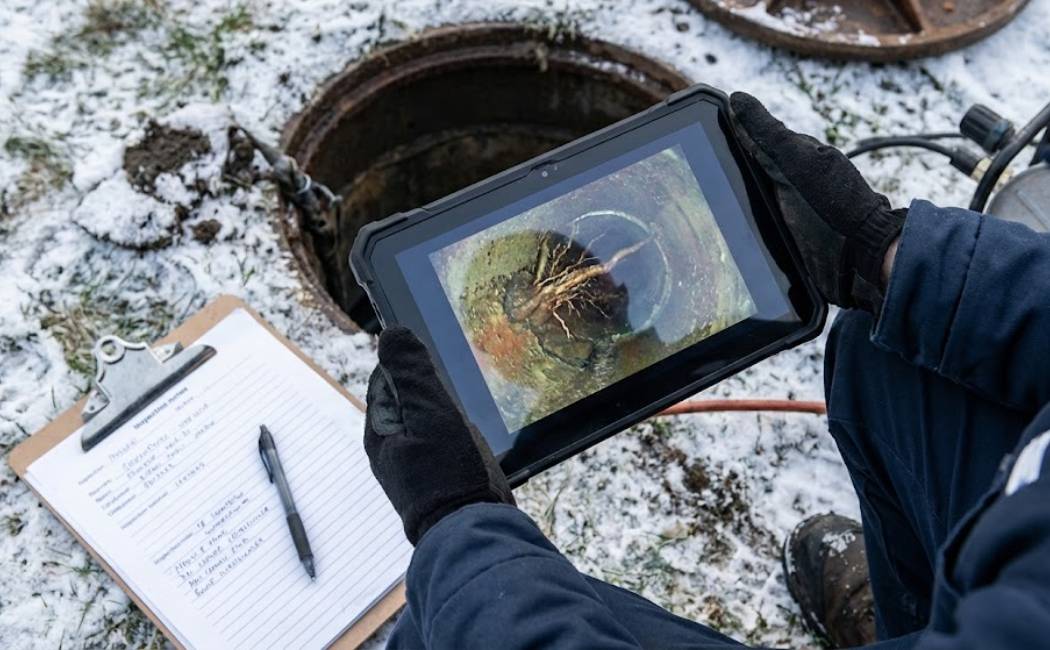
As temperatures fall, frozen soil can make these cracks worse. This leads to more intrusion and a higher risk of blockages. Warning signs may be frequent clogs, bubbling toilets, or sewer smells in the yard.
Root intrusion can cause significant damage to pipes. This is especially true in winter if it is not dealt with. Annual root removal treatments and hydro jetting clear out roots.
They also prevent debris from building up. A camera inspection spots cracks early. This way, we can do repairs before cold weather makes the damage worse.
- Basement Sewer Backups
Sewage will first appear in basements if the main sewer line gets overwhelmed. Winter raises this risk. Frozen soil restricts drainage. Snowmelt increases pressure. Water usage increases during the holidays.

Homeowners might hear gurgling sounds from the floor drain. They may also notice odd sewer smells or slow drainage in lower-level fixtures. You should not ignore these early red flags.
Installing a backwater valve is a great way to stop sewage from coming back into your home. Clear your basement drains and schedule a pre-winter sewer cleaning. This gets your system ready for heavy use in the season. If drainage slows a lot, you need emergency cleaning to stop a full backup.
- Clogging Of Main Sewer Lines
This is the most severe winter plumbing emergency. A clogged main line impacts the whole house. It causes toilets to overflow, sinks to drain with difficulty, and water to back up into tubs or showers. When many fixtures fail at the same time, it’s almost always a main line issue.
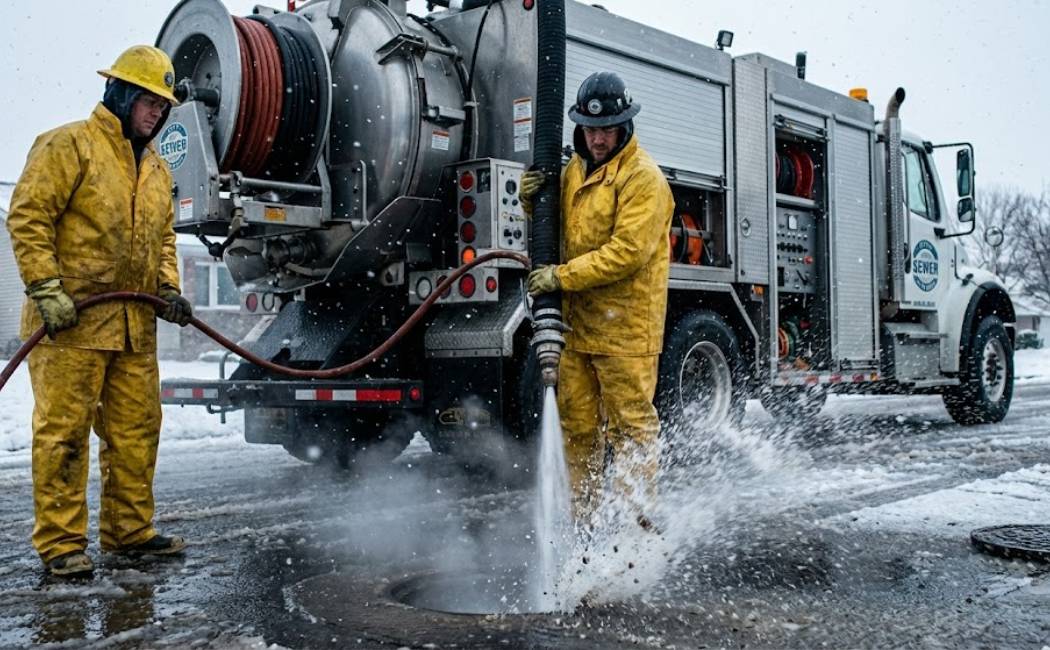
Causes include grease buildup, root intrusion, collapsed pipes, and ice blockages underground. Winter debris and frozen soil can put pressure on weak pipes. This makes them more likely to fail.
You can avoid this by scheduling a yearly camera inspection. This helps spot early issues. Also, clean the main line with hydro jetting to remove any buildup. Addressing small cracks before freezing temperatures arrive can save thousands in repairs.
Pro Tips to Stay Backup-Free This Winter
You can protect your home by developing a few simple habits. Run hot water often to keep pipes clear. Don’t flush wipes or hygiene products. Also, never pour grease down the drain. Insulating vulnerable pipe sections and keeping drains free of debris also helps. If your drains slow down, get them cleaned before the holidays. This can stop an emergency. Many homeowners use hydro jetting every year or two. It’s especially helpful before freezing weather arrives.
When to Call a Sewer Emergency Team
If you see water backing up in sinks or tubs, notice bubbling toilets, or smell strong sewage, call a pro right away. Another sign that you shouldn’t ignore is an overflow from the basement floor drain. Acting without delay prevents indoor flooding, structural damage, and costly restoration work.
A sewer emergency team can respond without delay.
- Clear drains
- Use hydro jetting.
- Conduct camera inspections.
- Restore freeze-thaw lines.
- Remove roots
Drain Drainers offers 24/7 support and fast response times during the peak winter months.
Book Winter Sewer Protection & Emergency Cleaning
Winter sewer emergencies can escalate without warning. Appointment availability falls a lot in cold weather, so it’s crucial to act early.Book your winter sewer protection or emergency drain cleaning with Drain Drainers today. Enjoy the winter season worry-free. Quick responses, great gear, and skilled technicians mean you’ll stress less about sewer issues.